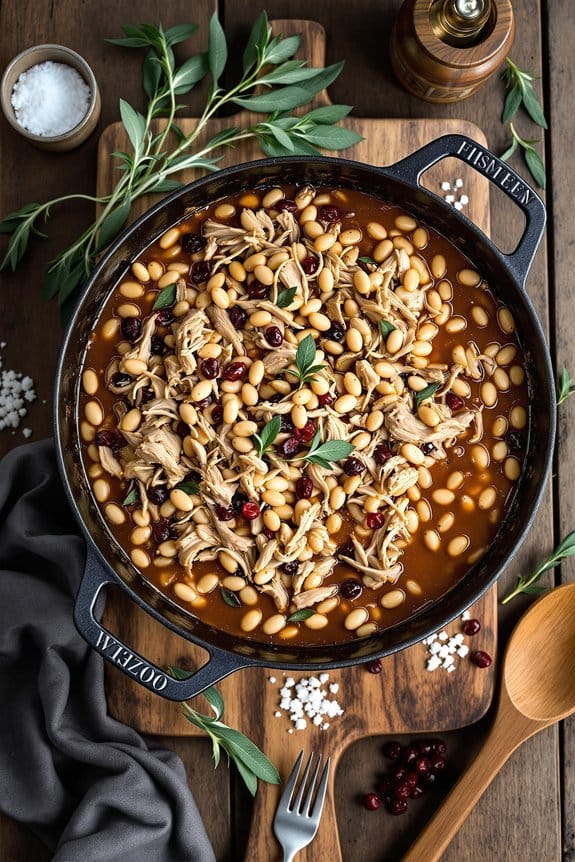
Rustic Pork & Bean Recipe With Cranberries
I grew up watching my grandmother transform humble ingredients into memorable meals, and this rustic pork and bean dish is my tribute to her culinary wisdom. There’s something magical about the way dried cranberries melt into the rich sauce, adding unexpected sweetness against the savoury pork shoulder. It’s comfort food with a twist that’ll have everyone asking for seconds. Wait until you discover the simple technique that makes the beans creamy without turning mushy!
Table of Contents
Why You’ll Love this Rustic Pork & Haricot Beans with Cranberries

If you’re looking for a dish that combines comfort and sophistication, this Rustic Pork & Haricot Bean recipe is about to become your new favourite.
I’ve made this countless times, and it never fails to impress both family and dinner guests alike.
What makes this recipe special is how it transforms humble ingredients into the ultimate comfort food. The pork shoulder becomes fall-apart tender after slow-cooking with aromatic sage and shallots, while the beans absorb all those delicious flavours.
The dried cranberries add unexpected bursts of sweetness that perfectly balance the savoury elements.
It’s a hearty meal that’s perfect for weekend cooking when you want something impressive without constant attention. Just set it in the oven and let the magic happen!
What Ingredients are in Rustic Pork & Haricot Beans with Cranberries?

This rustic pork and bean dish might look impressive on your table, but you’ll be pleased to know it requires quite straightforward ingredients that create magic together. The beauty lies in how these simple components evolve during the slow cooking process, with the pork becoming meltingly tender as it infuses the beans with its rich flavour. The dried cranberries might seem an unusual addition, but trust me, they provide little bursts of sweetness that balance the savoury elements perfectly.
- 1 lb (about 2 cups) dried navy beans (also called haricot beans in the UK)
- 5 lbs pork shoulder blade roast, trimmed of excess fat
- 1½ teaspoons kosher salt, divided
- ¼ teaspoon black pepper
- 2 tablespoons fresh sage, divided (some minced, some in sprigs)
- 1½ cups sliced shallots (about 8 medium)
- 5 cups water
- 3 sprigs fresh sage (additional to the minced sage)
- ½ cup dried cranberries
- Cooking spray for the pan
When shopping for this recipe, quality matters with the pork, look for a nicely marbled shoulder cut that will break down beautifully during the long cooking time. The dried beans are much more economical than tinned ones, and they’ll absorb more flavour too, though they do require that overnight soak. Fresh sage really makes a difference here compared to dried, so do try to find it if possible. And while regular onions could substitute for shallots in a pinch, the shallots provide a milder, more complex sweetness that works wonderfully with the pork and cranberries.
How to Make this Rustic Pork & Haricot Beans with Cranberries
To change this hearty pork and bean dish into a proper BBQ masterpiece, we’ll need to adapt our cooking methods slightly. For this recipe, I’d recommend using indirect cooking on a Kamado BBQ or the oven/smoker attachment on an Ozpig stove.
Begin by soaking your 1 lb (about 2 cups) of dried navy beans overnight, no shortcuts here, I’m afraid, as this step is essential for proper texture. The next day, prepare your BBQ for indirect cooking at approximately 180°C (that’s the equivalent of our 350°F oven temperature).
Season your 5 lbs pork shoulder blade roast with 1 teaspoon of kosher salt, ¼ teaspoon of pepper, and 4 teaspoons of fresh minced sage, making sure to rub it thoroughly into the meat. For the initial browning stage, set up your BBQ for direct cooking and place a cast-iron Dutch oven directly over the heat.
Once hot, give the pork a proper sear on all sides for about 15 minutes total, you want that gorgeous caramelisation that will add depth to the final dish. Remove the roast temporarily and sauté your 1½ cups of sliced shallots in the same pot for 3 minutes until softened.
Return the pork to the pot, add the drained beans, remaining ½ teaspoon of salt, 5 cups of water, and 3 fresh sage sprigs. Now comes the shift to indirect cooking. Move your Dutch oven away from direct heat (or to the oven attachment if using an Ozpig), close the lid, and maintain that steady 180°C for about 2 hours.
After this time, introduce your ½ cup of dried cranberries and continue cooking for another 30 minutes. The brilliant thing about using a BBQ is the subtle smokiness that will infuse the dish, something you simply can’t achieve in a conventional oven. Additionally, using a stainless steel frame for your BBQ setup can enhance stability and mobility while cooking.
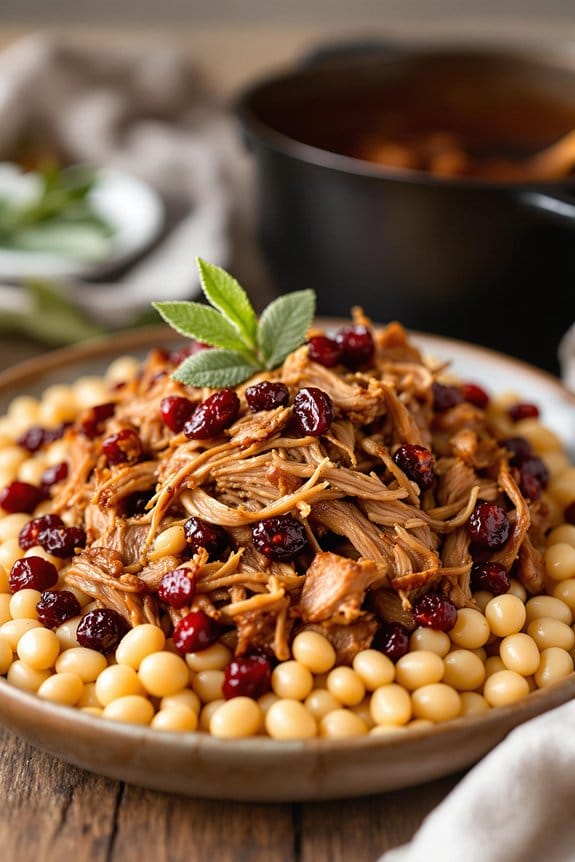
Once finished, discard the sage sprigs, shred that beautifully tender pork with two forks, and sprinkle with your remaining minced sage. The slow cooking process on the BBQ will have created a wonderfully complex flavour profile, with the beans creamy, the pork meltingly tender, and those little cranberries providing perfect pops of sweetness.
Rustic Pork & Haricot Beans with Cranberries Substitutions and Variations
Indirect Roasting Method:
- Soak 2-3 chunks of apple or hickory wood for smoking.
- Set up the Kamado for indirect cooking at 325°F with a heat deflector.
- Season and sear the pork shoulder directly over coals before moving it to the indirect zone.
- Place beans with remaining ingredients in a cast iron Dutch oven.
- Position the Dutch oven on the deflector plate with the pork above on the grill grate.
- Cook covered for 3-3.5 hours until the pork reaches an internal temperature of 195°F.
- Add cranberries in the last 45 minutes of cooking.
Ozpig or Big Pig Adaptation
Oven/Smoker Attachment Method:
- Soak the beans as directed in the recipe.
- Sear the pork directly over coals in the main fire chamber.
- Transfer the pork and bean mixture to the Dutch oven.
- Place in the oven/smoker attachment at medium heat (325-350°F).
- Add a small handful of oak or apple wood chips for smoke flavour.
- Cook for 2.5-3 hours, adding cranberries in the final 30 minutes.
- Monitor water levels, adding hot water if the mixture becomes too dry.
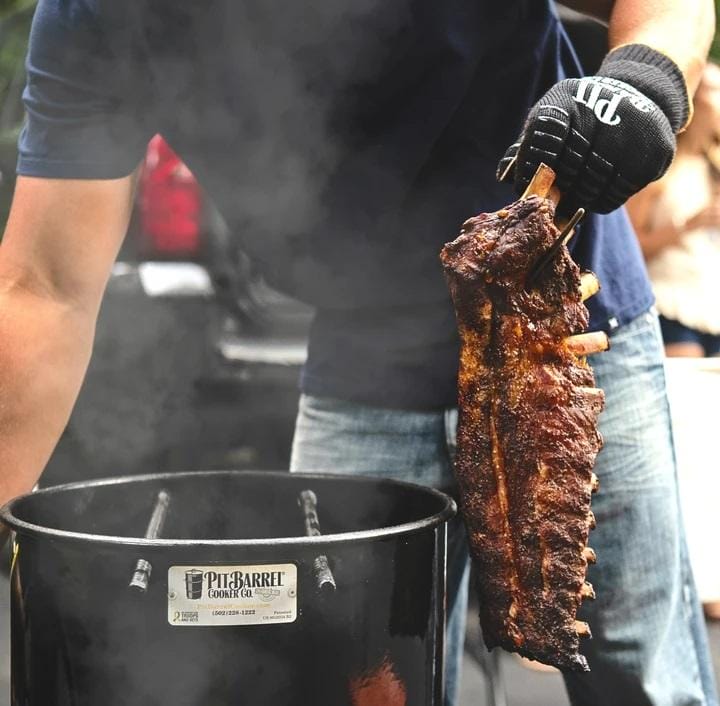
Pit Barrel Cooker Adaptation
Hanging/Roasting Method:
- Hook the pork shoulder with the provided meat hooks after seasoning with salt, pepper and sage.
- Hang in the Pit Barrel Cooker at 275-300°F.
- Place the Dutch oven with beans and remaining ingredients (except cranberries) on the grill grate at the bottom.
- Allow drippings from the pork to flavour the beans below.
- Cook for 3-4 hours until the pork is tender and pulls easily.
- Add cranberries to the bean mixture in the final 45 minutes.
- Remove the pork, shred, and serve with the bean mixture.
What to Serve with Rustic Pork & Haricot Beans with Cranberries
While this hearty rustic pork and bean dish stands beautifully on its own as a complete meal, I’ve found that pairing it with complementary sides enhances the dining experience.
The rich flavours and savoury notes of the dish open up exciting possibilities for sides pairing that’ll wow your dinner guests.
Here’s what I recommend serving alongside:
- A crisp green salad with apple slices and a light vinaigrette
- Warm crusty sourdough bread for sopping up the delicious bean broth
- Roasted root vegetables like carrots and parsnips
- Steamed broccolini with lemon zest
For wine selection, I’d go with a medium-bodied Pinot Noir or, if you prefer white, a rich Chardonnay that can stand up to the dish’s hearty flavours.


Final Thoughts
After cooking this rustic pork and bean dish countless times, I’ve come to appreciate how it embodies everything I love about home cooking. The slow cooking technique alters humble ingredients into something truly exceptional, allowing flavours to meld together over hours rather than minutes.
I’m also drawn to the sustainability practices this recipe encourages. Using dried beans instead of canned reduces packaging waste, while the pork shoulder—often an overlooked cut—showcases the importance of utilising the whole animal in our cooking.
What makes this dish truly extraordinary is how it connects us to traditional cooking methods that have sustained families for generations.
Frequently Asked Questions
Can I Make This Recipe in a Slow Cooker Instead?
I wondered that myself! Yes, you can use a slow cooker for this recipe. I would recommend 8-10 hours on low for tender results. The benefits of the slow cooker include less monitoring and enhanced flavour development.
How Do I Store Leftovers and How Long Will They Keep?
I’d store leftovers in airtight containers in the refrigerator for up to 3-4 days. For longer storage, I recommend freezing them—they’ll keep well for about 2-3 months when properly sealed.
Can Dried Sage Be Substituted for Fresh Sage?
Yes, I can substitute dried sage for fresh sage. I’d use 1 teaspoon of dried for every tablespoon of fresh. While dried sage offers convenience benefits, it won’t provide that bright fresh sage flavour.
Is It Necessary to Soak the Beans Overnight?
Yes, I recommend soaking the beans overnight. This soaking benefits the cooking process by softening them and ensuring proper bean texture when finished. You’ll achieve creamier, evenly cooked beans.
How Can I Make This Recipe Less Fatty?
Did you know that pork shoulder is 20% fat? To make this less fatty, I would choose leaner cuts like pork loin or tenderloin. You’ll get healthier alternatives while maintaining flavour.