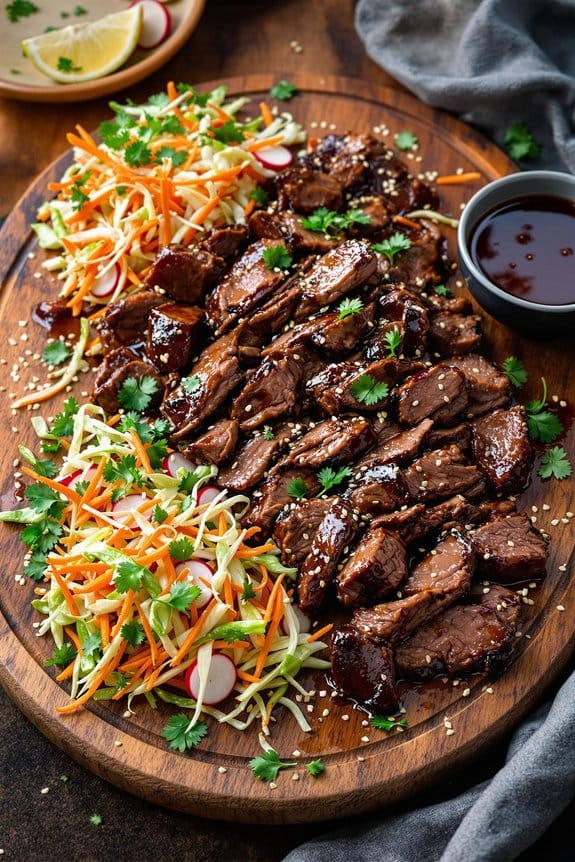
Tender Korean BBQ Beef Recipe
I’m passionate about great food that doesn’t require fancy techniques, and this Korean BBQ beef recipe perfectly fits that bill. When I first tasted this tender, flavour-packed dish, I knew I had to share it with you. The rich marinade seeps into every fibre of the meat, creating something truly special that’ll have everyone asking for seconds. Ready to transform an ordinary beef roast into something extraordinary with just a few simple ingredients?
Table of Contents
Why You’ll Love this Tender Korean Barbecue Beef
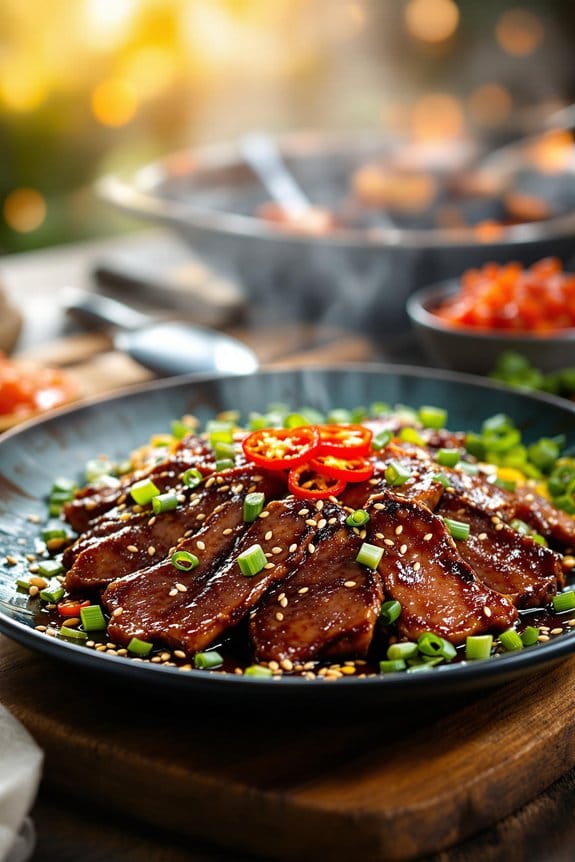
Who doesn’t crave that melt-in-your-mouth beef experience that leaves you reaching for seconds? This slow-cooked Korean beef delivers exactly that satisfaction with its rich flavour profile of soy, garlic, and sesame oil.
Trust me, the aroma alone will have your family circling the kitchen!
The beauty of this recipe is its simplicity. I’ve found the most important cooking tip is patience—letting that blade roast simmer low and slow until it practically falls apart with a gentle touch.
You don’t need fancy equipment or techniques, just your trusty slow cooker doing the heavy lifting while you go about your day. The meat soaks up all those incredible flavours and evolves into something truly special that’s perfect piled high on rolls or mashed potatoes.
What ingredients are in tender Korean barbecue beef?
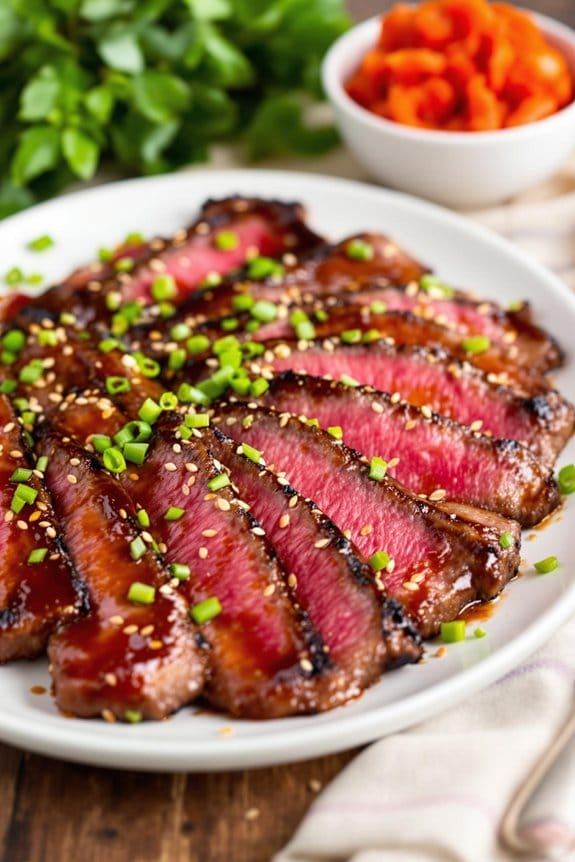
For this incredibly tender Korean Barbecue Beef, you’ll need just a handful of ingredients that work together to create that distinctive sweet-savoury flavour profile Korean cuisine is known for.
The magic happens when these simple components meld together during the slow cooking process, infusing the beef with a depth that just can’t be rushed.
I always find it remarkable how a few pantry staples can change a humble beef roast into something so spectacular.
- 1 beef blade roast (about 2-1/2 lb or slightly larger)
- 1/2 cup beef stock
- 1/3 cup soy sauce
- 2 tablespoons sesame oil
- 1 tablespoon granulated sugar
- 4 garlic cloves, minced
- 1 large onion, thinly sliced
- 1 teaspoon freshly ground black pepper
- 1 dozen kaiser rolls (for serving)
When shopping for your ingredients, the quality of your beef matters tremendously for this recipe.
Look for a nicely marbled blade roast, as those streaks of fat will render down during cooking to create that melt-in-your-mouth texture we’re after.
As for the sesame oil, do try to use toasted rather than light if possible, it delivers a much more pronounced nutty flavour that really makes the dish sing.
And while the recipe calls for kaiser rolls, you could definitely substitute with brioche buns or even steamed bao if you’re feeling adventurous.
The versatility of these ingredients is part of what makes this dish such a winner.
How to Make this Tender Korean Barbecue Beef
To adapt this tender Korean Barbecue Beef for the barbecue, we’ll want to use indirect cooking methods that mimic the slow-cooker’s gentle heat. Start by preparing your marinade just as you would for the slow cooker, mix 120ml beef stock, 80ml soy sauce, 30ml of sesame oil, 15g of granulated sugar, 4 minced garlic cloves, 1 thinly sliced large onion, and 5g of fresh ground black pepper in a large bowl.
Remove any string from your 1.1kg beef blade roast, cut it in half, and let it bathe in this gorgeous marinade for at least 2 hours (overnight in the fridge works brilliantly if you’re planning ahead).
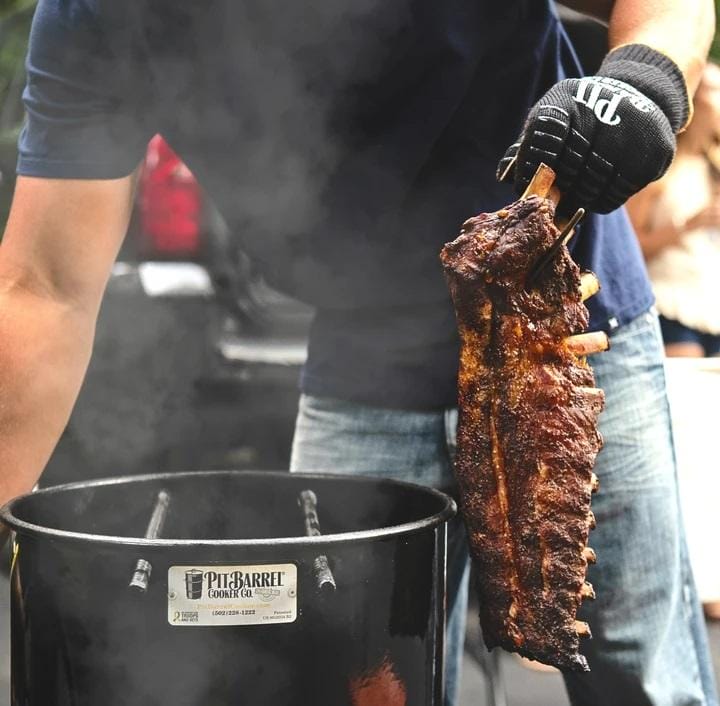
For cooking on a Kamado BBQ or Pit Barrel Cooker, you’ll want to set it up for indirect cooking at about 120°C. Place a drip tray beneath the grill grates to catch those flavourful juices, then pour the marinade into this tray and position your marinated beef above it.
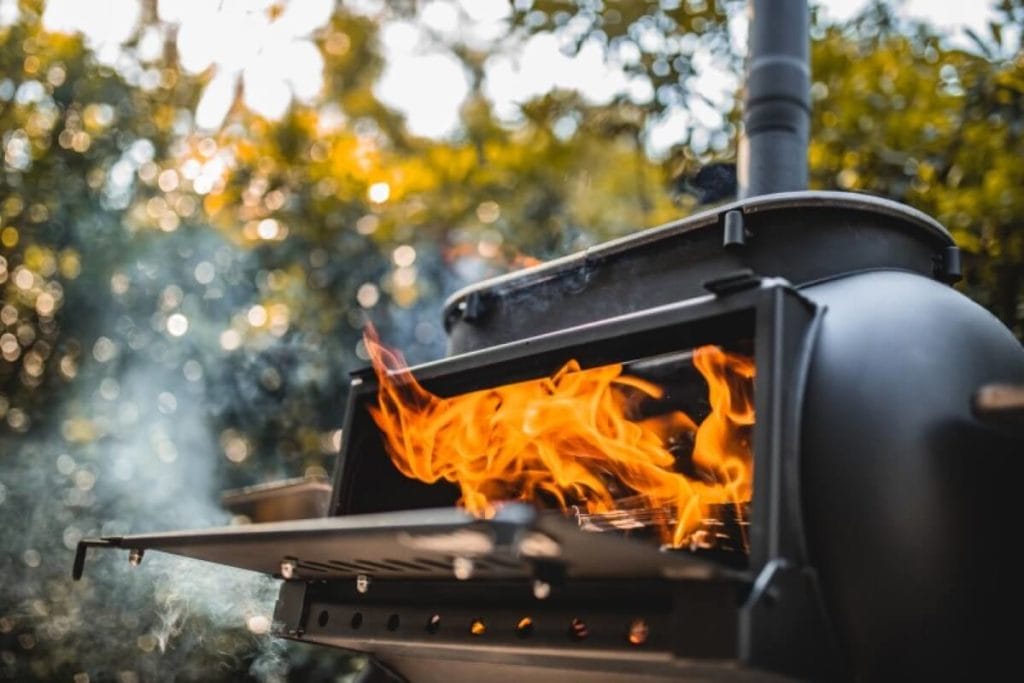
Close the lid and let the beef cook low and slow for about 4-5 hours, or until it reaches that perfect fork-tender consistency. If you’re using an Ozpig with an oven attachment, you’ll follow the same principle, maintaining that steady 120°C temperature while the beef cooks indirectly, allowing the marinade to bubble away beneath, continuously basting the meat with its vapours.
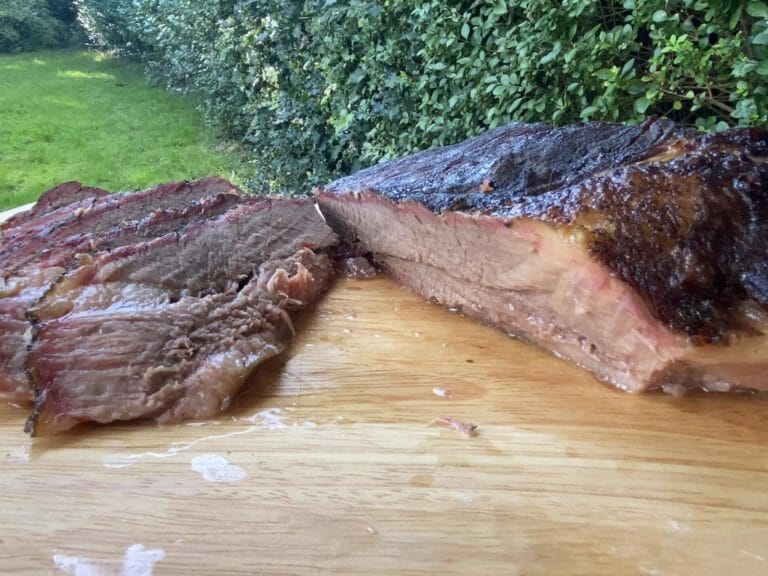
Once your beef reaches that melt-in-your-mouth tenderness where it practically falls apart at the touch of a fork, remove it from the barbecue and let it rest for 15-20 minutes.
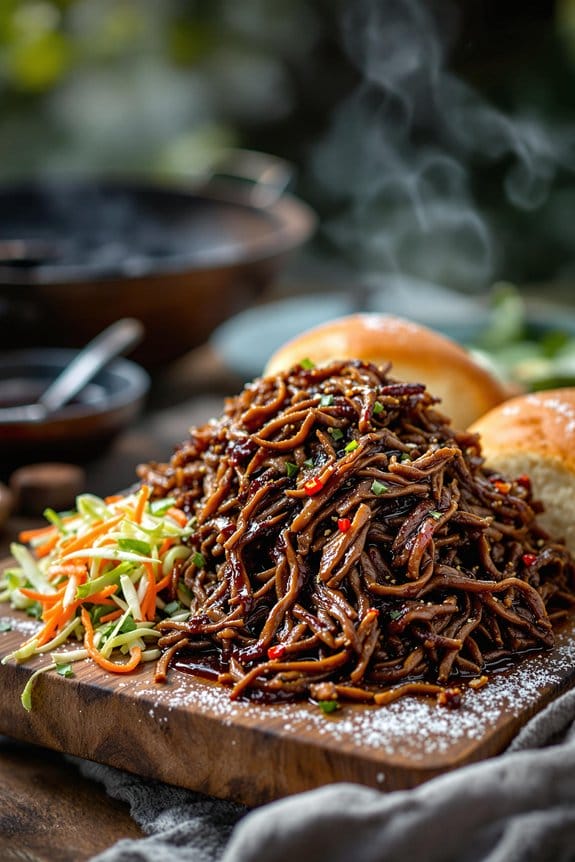
Then, using two forks, shred the beef into succulent strands and return it to the cooking juices that have now reduced into a rich, intensely flavoured sauce. For serving, pile generous portions onto your kaiser rolls, perhaps with a crunchy slaw for contrast. The smoky notes from the barbecue add an extra dimension to this already magnificent Korean beef that you simply can’t achieve in a conventional slow cooker, it’s the kind of food that creates silence around the table as everyone tucks in, followed by murmurs of appreciation. Additionally, using Monolith Virgin Hardwood Lump Charcoal will enhance the flavour profile with its high energy output and refined burning characteristics.
Tender Korean Barbecue Beef Substitutions and Variations
Kamado BBQ Method
- Indirect Low and Slow: Cook at 110-121°C for 4-5 hours until fork-tender.
- Hot and Fast Roasting: Sear over direct heat first, then move to indirect heat at 149-163°C for 2-3 hours.
- Smoking: Add hickory or applewood chips for a smoky flavour while cooking indirectly.
Ozpig & Big Pig Method
- Low & Slow Smoking: Use the oven attachment with wood chips at 107°C for 5-6 hours.
- Rotisserie: Marinate the roast first, then cook on rotisserie for even browning.
- Charcoal Cooking: Use indirect charcoal heat with a drip tray underneath.
Pit Barrel Cooker Method
- Hanging Method: Hang beef cuts for 3-4 hours at controlled temperature.
- Indirect Smoking: Position beef away from direct heat with added wood chips.
Substitutions:
- Replace blade roast with chuck roast, brisket, or short ribs.
- Use coconut aminos instead of soy sauce for a gluten-free option.
- Add gochujang or gochugaru for authentic Korean spice.
- Incorporate pear or apple juice for traditional tenderising.
- Consider using a Kamado BBQ for optimal cooking results due to its versatility and heat retention.
What to Serve with Tender Korean Barbecue Beef
Pairing the right sides with your tender Korean barbecue beef enhances the entire meal from simply delicious to truly unforgettable.
I love serving this savoury beef on fluffy kaiser rolls for the perfect handheld meal, but it’s equally impressive piled high on creamy mashed potatoes!
For authentic serving ideas, try adding kimchi, pickled vegetables, or a simple cucumber salad for that perfect tangy contrast.
A side of steamed rice makes the perfect base to soak up all those remarkable juices from the slow cooker.
My favourite sides suggestions include roasted vegetables, a crisp green salad, or even some quick stir-fried bok choy.
Don’t forget the garnishes – a sprinkle of sesame seeds and sliced spring onions adds that perfect finishing touch!

Final Thoughts
While I’ve shared all the details for making Korean BBQ beef in your slow cooker, what I love most about this recipe is its incredible versatility and forgiving nature.
It’s become my go-to for busy weeknights and weekend gatherings alike.
Here are my top takeaways for making this dish truly spectacular:
- Don’t rush the cooking time – those extra hours on low heat make all the difference
- Pat the beef dry before adding to enhance browning and flavour development
- For deeper flavour enhancements, toast your sesame oil briefly before adding
- Save some cooking liquid to drizzle over your shredded beef just before serving
Frequently Asked Questions
Can I Use a Different Cut of Beef for This Recipe?
Like a chef with endless options, I’d say yes! You can use chuck roast, brisket, or even short ribs for this slow-cooked recipe. Alternative beef cuts work beautifully with these cooking methods.
Is This Dish Spicy?
No, I wouldn’t consider this dish spicy. The flavour profile leans more towards savoury and sweet with soy sauce and sugar, without any chilli or hot spice elements in the ingredients.
How Long Will Leftovers Keep in the Fridge?
I’d tell you leftovers last forever, but let’s be realistic! For leftover storage, I recommend refrigerating this Korean beef for 3-4 days. My refrigeration tip: store in airtight containers to maintain quality.
Can I freeze the cooked Korean beef?
Yes, you can freeze cooked Korean beef! I would recommend portioning it into airtight containers with some sauce. It will keep for 2-3 months. Thaw overnight in your refrigerator before reheating.
What’s the Difference Between Korean BBQ and This Slow-Cooked Version?
I’d say the main difference is in traditional cooking methods. Korean BBQ is grilled quickly over high heat, whereas this slow-cooked version develops deeper flavour profiles through long braising times.